

Are you getting the IT support you need?
Tick against what your current provider is doing for you
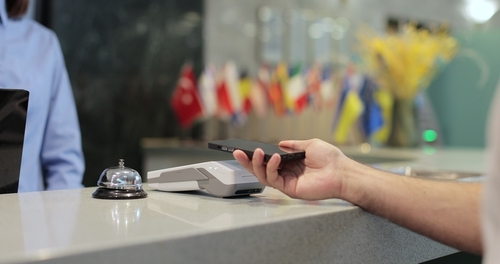
In hospitality, peak periods are where reputations are made, or broken. A fully booked hotel during check-in rush, a busy restaurant service, or a conference day with hundreds of delegates all depend on one thing working flawlessly in the background: IT systems.
When those systems fail under pressure, the impact is immediate:
The good news is that most peak-time failures are predictable and preventable once you understand where the pressure points really are.
Hotel IT environments are rarely a single system. They are an interconnected stack of platforms working together in real time:
Failure usually occurs not because one system is broken, but because the integration between systems becomes overloaded or unstable.
Peak check-in and check-out times create concentrated bursts of network activity. Staff terminals, mobile devices, payment systems, and guest WiFi all compete for bandwidth at once.
Common symptoms include:
The root cause is often under-provisioned network infrastructure or poorly segmented traffic.
Modern hotel operations rely heavily on cloud-based PMS platforms. While scalable in theory, they can still experience latency during high concurrency periods, especially when combined with multiple integrations (channel managers, booking engines, CRM tools).
Even a few seconds of delay per transaction can cascade into long queues at reception.
Card payments are one of the most sensitive failure points. At peak times, payment gateways can slow down due to:
When payment systems stall, everything else stops with them.
Guest expectations for WiFi are higher than ever, and usage spikes sharply during conferences, weddings, and group stays.
Without proper segmentation, guest traffic can overwhelm internal operational systems, leading to:
Many hotels unknowingly rely on critical single points of failure:
When any of these fail under pressure, there is no fallback route.
The goal is not just stability. It is predictable resilience under load. That requires good design and not faster reaction times!
A properly designed hotel network separates traffic into distinct layers:
This prevents guest demand from interfering with core operational systems.
Dual internet connections from different providers should be standard in any hospitality environment. Ideally:
Automatic failover ensures continuity even during ISP outages or congestion.
Hotels rarely stress-test systems in real conditions. Simulated peak load testing can identify:
This is especially important before seasonal peaks or large events.
Quality of Service (QoS) rules ensure that mission-critical systems always take priority over guest browsing:
This prevents operational slowdown even when networks are heavily used.
Hotels often rely on multiple SaaS platforms that must communicate reliably. Prevent failures by:
The weaker the integrations, the higher the risk of cascade failure.
Modern hotel IT should be monitored in real time, not reactively:
Early warning systems allow intervention before guests notice an issue.
A common mistake is designing systems for “normal” occupancy rather than worst-case demand. Instead, infrastructure should be built around:
Resilience should be engineered for the busiest 10% of days, not the average 90%.
Hotel technology is becoming more integrated, more cloud-dependent, and more guest-facing. That increases efficiency, but also raises the stakes of failure.
The future lies in:
Hotels that invest in resilience now will not only reduce downtime, they will create a noticeably smoother guest experience, especially when it matters most.
Peak-time IT failures are rarely random. They are the predictable result of systems designed for convenience rather than pressure.
With the right architecture, monitoring, and redundancy, hotels can turn their busiest moments into their most reliable ones, rather than their most stressful.


.svg)